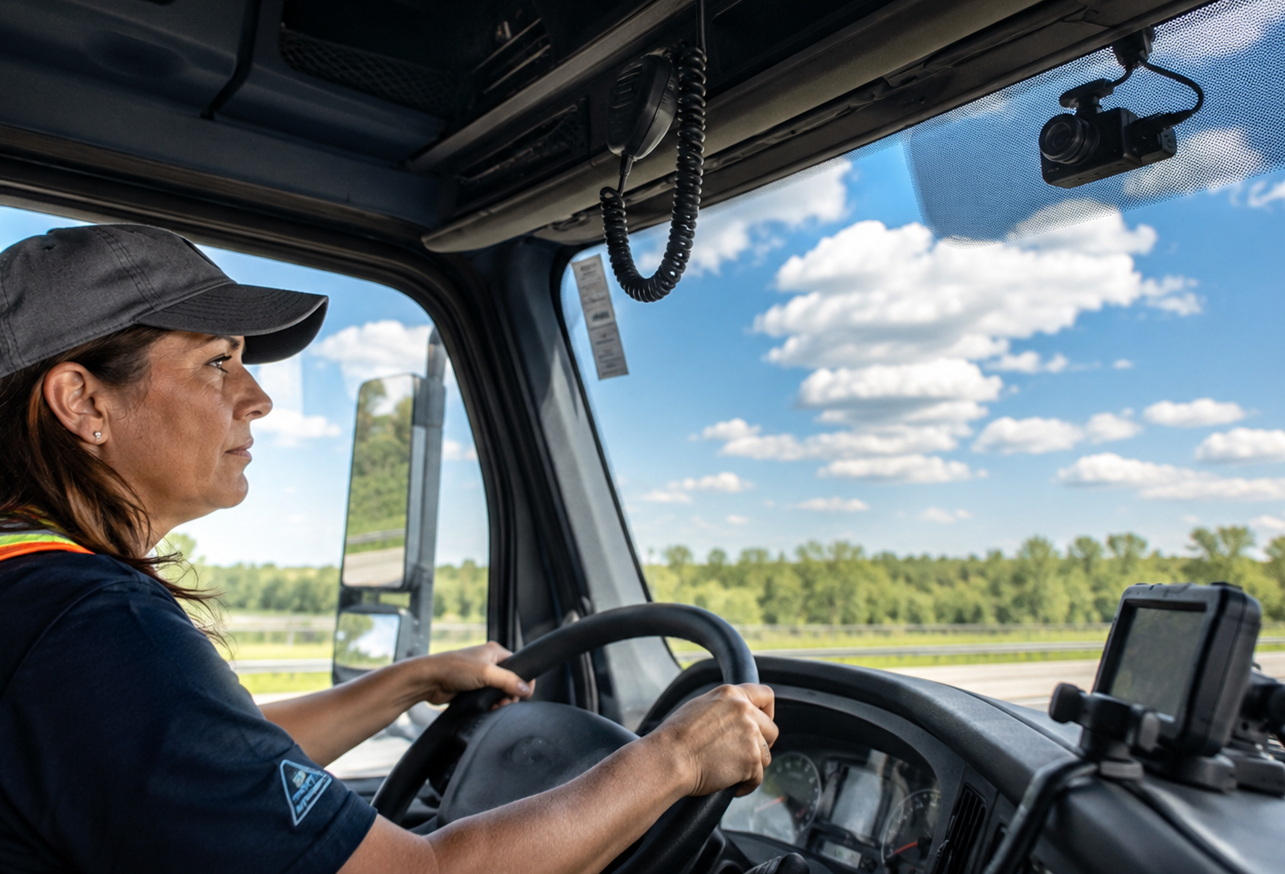
The BC Trucking Association (BCTA) recently convened the first meeting of its newly established Dashcam Task Force, bringing together representatives from carrier and technology supplier member companies to examine the practical implications of British Columbia’s new dashboard-camera legislation.
Bill M217, the Dashboard Cameras in Commercial Vehicles Act, will require commercial vehicles with a Gross Vehicle Weight Rating exceeding 11,793 kilograms to be equipped with a forward-facing dashboard camera. The legislation establishes several general requirements, including a minimum 72-hour video-retention period, recording quality of at least 1080p, night-vision capability and storage of recordings using the device’s default manufacturer settings.
The legislation will not take effect until the accompanying regulations have been finalized and brought into force. Those regulations will establish many of the operational and technical details necessary for carriers, drivers and enforcement agencies to understand how the requirements will work in practice.
BCTA has been invited to participate in the provincial government’s stakeholder consultation process. The Dashcam Taskforce will serve as the Association’s primary forum for gathering industry feedback, identifying implementation concerns and developing recommendations for government.
Clarifying Which Vehicles Are Covered
 One of the first questions raised by taskforce members concerned the scope of the legislation.
While the weight threshold clearly captures conventional heavy-duty trucks and motorcoaches, members noted that clarification is needed regarding specialized and vocational equipment. This could include cranes, concrete trucks and other large commercial vehicles that may operate differently from traditional highway transportation fleets.
Clear definitions will be necessary to ensure the requirements are interpreted and applied consistently across the province.
Balancing Recording Quality and Retention
 Members also discussed the requirement to retain at least 72 hours of footage.
Many existing fleet-camera systems can provide 72 hours of recording at a lower resolution or a shorter retention period when recording continuously in high definition. Requiring 72 hours of continuous 1080p footage could therefore require significant hardware upgrades for some carriers.
At the same time, taskforce members recognized the importance of establishing a meaningful minimum standard. Without an appropriate baseline, operators could potentially install inexpensive cameras that provide limited image quality, reliability or evidentiary value.
Members agreed that the regulations should balance the need for usable footage with the cost and operational realities facing fleets.
Allowing Flexible Storage Solutions
 The task force examined whether footage should be required to remain on a camera’s local storage or whether cloud-based storage should also be permitted.
Many modern telematics systems automatically upload video and incident data to secure cloud platforms. This can preserve footage if a camera or vehicle is damaged during a collision and can notify carriers when a device is offline or malfunctioning.
Cloud storage may also reduce the risk of footage being intentionally deleted through the removal or destruction of a local storage card.
However, members operating in Northern and Interior B.C. noted that reliable connectivity is not always available. In these areas, sufficient local storage remains essential until a vehicle returns to an area where footage can be uploaded.
The task force generally supported regulations that focus on maintaining the required footage rather than prescribing one storage method. Carriers could then use local storage, cloud storage or a combination of both, depending on their operations.
Installation, Maintenance and Compliance
 Members emphasized that technical specifications alone will not ensure cameras produce useful footage.
A compliant camera could still be ineffective if it is mounted incorrectly, obstructed, dirty, misaligned or malfunctioning. Snow, road debris, vibration and normal vehicle wear can also affect camera performance over time.
The regulations should therefore provide clear guidance regarding installation, inspection, testing and maintenance. Cameras should be positioned to provide a centred and unobstructed view of the roadway, with appropriate consideration given to mounting angles and vehicle components.
Members also suggested that regulators could consider comparing dashcam recording logs with Electronic Logging Device operating hours. This could help identify situations in which a commercial vehicle was operating while its dashboard camera was not recording as required.
The task force further discussed whether vehicle-speed and GPS location data should be retained alongside video footage. Many commercial telematics systems already capture this information, and members noted that it could provide important context when footage is reviewed.
Addressing Driver Privacy
 Taskforce members reported relatively little resistance from drivers regarding forward-facing cameras, particularly among fleets that already use them and clearly explain how the technology operates.
Greater concerns were associated with inward-facing cameras and audio recording. Members recommended that the regulations explicitly confirm that the provincial requirement applies only to forward-facing video and does not require inward-facing surveillance or audio recording.
Members also emphasized the importance of transparency. Drivers should understand when recording occurs, what information is collected, how it may be used and who can access it.
This is particularly important for systems that continue recording briefly after a vehicle has been turned off. Clear company policies, communication and education will be essential to maintaining driver trust and complying with applicable privacy requirements.
Establishing Rules for Access to Footage
 The task force identified access and disclosure as another area requiring detailed regulatory guidance.
Members requested clarification regarding which enforcement authorities may request footage, the circumstances under which it may be requested and whether carriers could be required to provide footage when their vehicle or driver was only a third-party witness.
Other questions included how footage would be transferred between different camera systems and enforcement agencies, how much time carriers would have to retrieve and provide recordings, and whether responsibility would rest with the driver, fleet operator or technology provider.
For cloud-based systems, drivers may not have direct access to recorded data at the roadside. For locally stored systems, surrendering a memory card or recording device could potentially leave a vehicle unable to operate in compliance with the legislation.
Members also stressed the need for appropriate privacy safeguards and clarity regarding existing legal protections.
Continuing Industry Engagement
The Dashcam Taskforce will remain active throughout the government’s consultation process. It will continue gathering feedback, examining emerging issues and developing recommendations to help ensure the regulations are practical, effective and clearly understood. If you have any questions, please reach out to the Policy Team at [email protected].