Lower Mainland Medium- and Heavy-Duty Vehicle Study
Study Overview
The BC Trucking Association (BCTA) has partnered with Deloitte LLP to chart decarbonization pathways for British Columbia’s medium- and heavy-duty (MHD) transportation sector, with particular emphasis on the Lower Mainland. The study was developed collaboratively with the BC Provincial Government, BC Hydro, and FortisBC, who provided input on approach, scope, methodology, and key assumptions.
Study Objectives
This comprehensive analysis was designed to:
- Assess the current state of the MHD vehicle sector, including vehicle stock, energy consumption, fleet locations, high-traffic corridors, and existing refueling infrastructure
- Forecast technology adoption under three scenarios (base, reserved, and optimistic), accounting for technical feasibility, economic viability, and policy influences
- Analyze total cost of ownership (TCO) and infrastructure investment requirements—critical drivers of technology adoption decisions
- Identify optimal refuelling locations for different fuel technologies based on demand patterns, proximity to fleet yards, and investment needs
Current State: Key Findings
Vehicle Stock and Energy Consumption
Class 8 trucks dominate the Lower Mainland’s MHD fleet, representing nearly 60% of vehicles and driving the majority of fuel demand. Diesel remains overwhelmingly dominant at approximately 95% of total energy consumption across all vehicle classes. Of the region’s 61 PJ total energy demand, Class 8 trucks alone consume about 49 PJ—roughly 80% of the total—highlighting the critical importance of targeting this segment for decarbonization.
Alternative fuels remain negligible, with fewer than 2% of vehicles operating on compressed natural gas (CNG), battery electric (BEV), or hybrid electric (HEV) technologies, collectively contributing less than 1 PJ to total energy demand.
Freight Corridors and Geographic Patterns
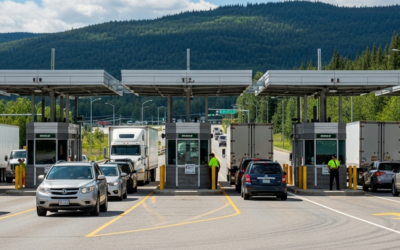
Highways 1, 99, and 17 form the backbone of the Lower Mainland’s freight network, connecting ports, warehousing hubs, and cross-border trade routes through Surrey, Delta, Richmond, and Vancouver. Surrey serves as the region’s central freight hub, combining high concentrations of domiciled fleets with substantial corridor traffic volumes. Secondary routes like Highway 11 provide targeted connectivity for agricultural and regional trade but carry comparatively lower Class 5–8 traffic.
Fleet Operator Insights
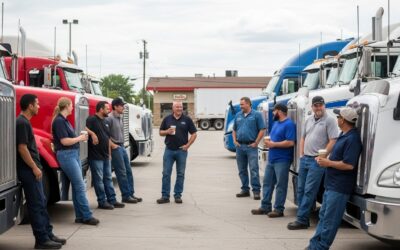
Interviews with fleet operators across diverse duty cycles and fuel technologies revealed:
- Battery electric vehicles (BEVs) are viewed as the most commercially ready zero-emission option, though operators emphasized the need for megawatt-level charging infrastructure to enable long-haul operations and mitigate weather-related range constraints
- Fuel cell electric vehicles (FCEVs) are seen as a longer-term solution, with pilot project interest contingent on government support, reliable hydrogen supply chains, and confidence in vehicle availability from OEMs
- Compressed natural gas (CNG) adoption remains limited due to negative past experiences, including maintenance challenges and vehicle design shortcomings
- Purchasing decisions are driven primarily by operational fit, duty cycle requirements, infrastructure accessibility, OEM support, and long-term total cost of ownership
Technology Adoption Scenarios
The study modelled three adoption scenarios—base, reserved, and optimistic—revealing distinct pathways for different fuel technologies:
Diesel and Renewable Fuels
Long-haul operations exceeding 500 km per day are expected to remain predominantly diesel-powered in the near term. Maintaining and expanding renewable diesel and biodiesel supply will be essential as a bridge strategy during the transition period.
Battery Electric Vehicles (BEVs)
BEVs show strong potential for short-haul applications under 500 km per day with lighter loads (up to 25,000 lbs). By 2050, market share in suitable applications could reach nearly 50%, with energy demand approaching 3 PJ (approximately 800 GWh). This transition will require significant grid capacity upgrades at critical fleet yards and extensive charging infrastructure deployment along key corridors.
Hydrogen Fuel Cell Vehicles (FCEVs)
Hydrogen adoption is anticipated primarily in Class 8 long-haul segments, potentially reaching 2 PJ by 2050. Success depends on competitive energy pricing, reliable delivery infrastructure, and strong manufacturer support.
Compressed Natural Gas (CNG)
A compelling business case exists for CNG in Class 7–8 long-haul applications, with demand projected to reach 9 PJ by 2050. Realization of this potential is contingent on improved vehicle reliability and the development of fast-fill refuelling infrastructure.
Infrastructure Requirements
Battery Electric Charging
BEV demand will concentrate along the Highway 1 and Highway 17 corridors. Private depot charging is highly recommended in these areas, with infrastructure investments needed to support grid capacity upgrades at major fleet yards.
CNG Refueling
The highest CNG demand hotspots are projected near Abbotsford Airport and Campbell Heights, requiring up to three fast-fill public refueling stations to serve long-haul operations.
Hydrogen Refueling
Additional hydrogen infrastructure investment is projected for two major demand areas: Highway 1 near Abbotsford Airport and the Chilliwack corridor along Highway 1.
Recommendations for BCTA
To accelerate the adoption of low-carbon and zero-emission vehicles in British Columbia, the study recommends BCTA pursue the following strategic initiatives:
Build Awareness and Knowledge
- Share fleet operator success stories and case studies
- Conduct peer-learning programs on BEV, hydrogen, CNG, and renewable diesel adoption
- Collaborate with utilities and OEMs on demonstrations and media campaigns
- Launch recognition programs such as “BCTA Clean Fleet Certified” and annual awards
Enable Collective Action
- Support shared infrastructure development to reduce individual fleet investment barriers
- Facilitate group purchasing agreements to improve technology economics
- Coordinate access to government and utility incentive programs
Develop Cross-Sector Partnerships
- Partner with financial institutions to reduce upfront capital requirements and de-risk adoption
- Work with OEMs to improve vehicle availability and support
- Collaborate with training institutions to build workforce capacity for zero-emission vehicle maintenance and operation
The transition to low-carbon and zero-emission medium- and heavy-duty vehicles in British Columbia presents both significant challenges and clear opportunities. Success will require coordinated action across industry, government, utilities, and manufacturers, with targeted strategies for different vehicle classes and duty cycles. By focusing on the highest-impact segments—particularly Class 8 trucks—and building the necessary infrastructure and support systems, the Lower Mainland can lead the way in sustainable freight transportation.