Association urges Province to pause new MELT school approvals while BC overhauls training oversight and enforcement
LANGLEY, BC [Sept 29, 2026] — The BC Trucking Association (BCTA) is calling for an immediate moratorium on new schools offering Mandatory Entry-Level Training (MELT) for Class 1 drivers until the Province addresses gaps in how those schools are approved, monitored, and held accountable.
According to ICBC data reviewed by BCTA, the overall road test pass rate rose from approximately 57 percent in the three years before MELT to about 61 percent in the three years after its introduction, an increase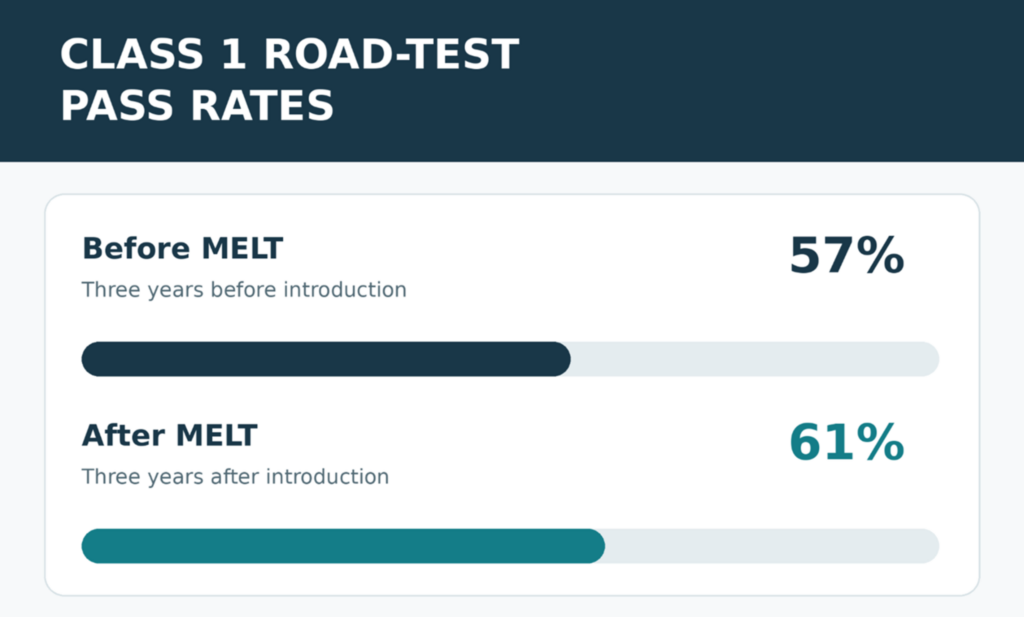 of just four percent. BCTA says the modest gain, despite an unchanged road test and a requirement for schools to conduct 13 competency assessments during training, reinforces the need to examine training delivery and oversight before approving more schools.
BCTA says the current system needs an industry-led redesign to ensure drivers receive the training they are promised and demonstrate the skills they need on the road. The association is asking all parties in the provincial election to commit to the moratorium and to reform the program with commercial carriers and reputable training providers at the table.
“Adding more schools before we can verify the quality of the training they deliver will not solve the problem,” said Dave Earle, BCTA President and CEO. “We need to strengthen the rules and enforcement first, then make sure every school meets them.”
BCTA supports mandatory training for new Class 1 drivers and the current curriculum. Its proposed moratorium would apply to new MELT schools while the approval and oversight framework is redesigned; it is not a call to stop training at schools already authorized to deliver the program.
Alongside the moratorium, BCTA is calling for:
- Industry-led reform that gives carriers and reputable training providers a meaningful role in defining the governance and enforcement of Class 1 driver training;
- Independent accreditation and stronger oversight, with clear standards, regular audits, and enforcement focused on higher-risk providers;
- A road test grounded in commercial-driving competence and the conditions drivers encounter on the job;
- Independent verification of training hours before road-test eligibility, including linking electronic logging device records from training vehicles to student records;
- Stronger requirements for schools, including screening of owners and directors, minimum standards for facilities, instructors and equipment, and financial safeguards for student tuition;
- Safe, confidential reporting of suspected non-compliance, protection from retaliation and consequences for substantiated violations; and
- Public funding tied to quality, compliance and demonstrated training performance.
BCTA also wants the next government to examine whether current funding and licensing arrangements reward the number of students trained at the expense of training quality.
“A required course should mean the required instruction was actually delivered,” Earle said. “Our members want a system that backs good schools, protects students, and gives employers and the public confidence in the drivers entering our industry.”
BCTA is calling on every party to commit to an immediate pause on new MELT schools and a clear plan to strengthen the program. The goal is straightforward: training that is delivered as required, tested against the skills drivers need and backed by oversight the public can trust. For more information on BCTA’s work on commercial driver training, visit BCTrucking.com.
About BCTA
The BC Trucking Association is the recognized voice of British Columbia’s commercial road transportation industry. Representing motor carriers, suppliers, and industry partners across the province, BCTA advocates for a safe, efficient, sustainable, and competitive trucking sector. Through policy leadership, member services, education, training, and industry engagement, BCTA collaborates with government and stakeholders to support the people and businesses that drive British Columbia’s economy.
-30-
Media contact
Dave Earle, President & CEO
BC Trucking Association
604-888-5319