
Five years after Mandatory Entry-Level Training (MELT) was introduced in British Columbia, more than one in three Class 1 road test candidates continue to fail on their first attempt.
Introduced on October 18, 2021, MELT requires a minimum of 140 hours of instruction, covering classroom learning, yard training, and on-road driving through licensed training schools. The program was designed to establish a consistent foundation of skills and competencies for new commercial drivers entering the industry.
But is mandatory training delivering the outcomes the industry expected? The BC Trucking Association (BCTA) has taken a closer look at the data, and the results raise important questions about training quality, consistency, and accountability.
What the Data Shows
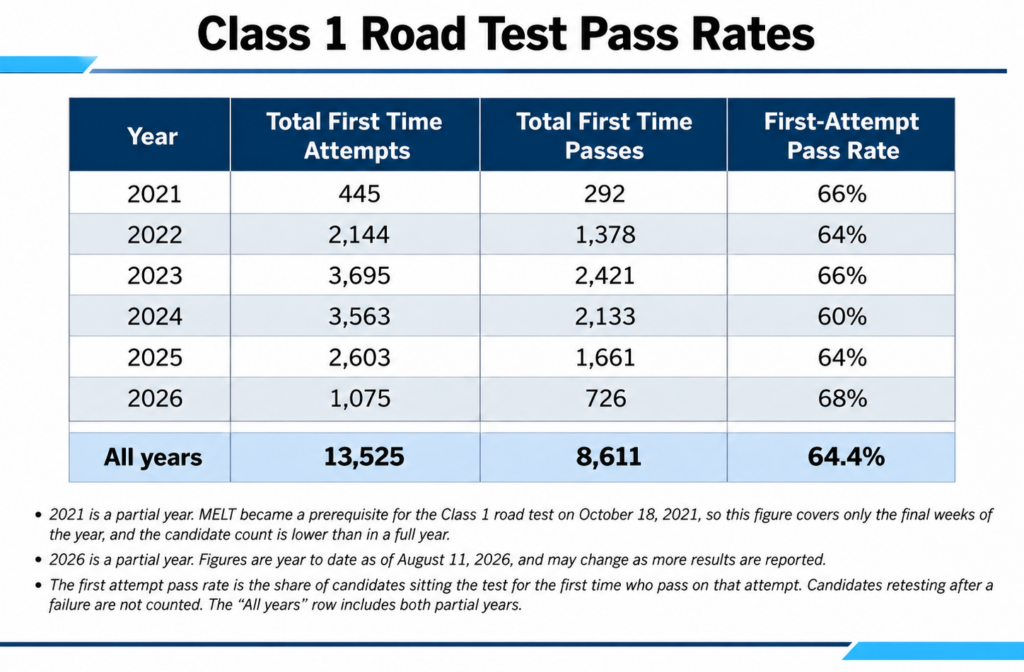
BCTA analyzed road test outcomes for candidates attempting the Class 1 road test for the first time. Between 2021 and 2026, 13,525 candidates took the test for the first time, and 8,611 passed. This translates to a first-attempt pass rate of 64%.
Put another way, nearly 4,900 candidates failed their first road test despite completing a training program specifically designed to prepare them for that assessment.
What the Results Mean
Several themes emerge from the data.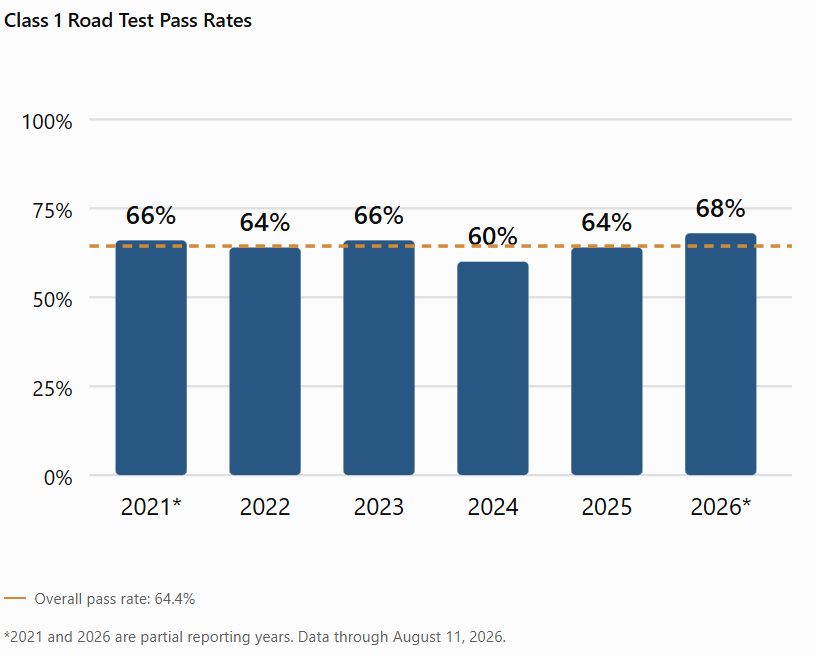
- There’s not much improvement. Before MELT was implemented, annual first time pass rates ranged from 58-61%. After MELT, which includes in-training assessments and confirmation of competency sign-offs by the instructor / school providing the training, pass rates have not significantly improved.
- Performance has plateaued. Since MELT’s introduction, first-attempt pass rates have remained at an average of 64%. The absence of a sustained upward trend raises questions about whether the system is improving over time. As training providers gain experience and refine their delivery, higher pass rates would be a reasonable expectation.
- Retesting remains a significant part of the system. Across the study period, approximately 22,400 road tests were administered to 13,525 first-time candidates. This equates to roughly 1.7 road tests for every individual entering the licensing process. Each additional test represents further costs for candidates, additional pressure on testing capacity, and delays for employers waiting to place newly trained drivers into service.
What This Means for Carriers
A standardized, mandatory training program should provide carriers with greater confidence in the foundational competencies of newly licensed drivers. With MELT incorporating in-training assessments and competency sign-offs, candidates who successfully complete the program should be well prepared for their road test.
 Yet with more than one in three candidates failing on their first attempt, questions remain about the consistency and effectiveness of training delivery.
These concerns are amplified by the financial investment required. With Class 1 MELT tuition approaching $17,000 at some training providers, unsuccessful road test attempts can place additional financial pressure on candidates, increase demand on testing resources, and delay entry into the workforce.
For carriers, the issue extends beyond road test performance. Employers need confidence that graduates possess the foundational skills, knowledge, and professional judgment necessary to begin their careers safely.
A standardized training framework should establish consistent minimum competencies regardless of where a driver receives their training. Strengthening accountability and transparency would help carriers make more informed hiring decisions and build greater confidence in the training system.
What Members Are Asking For
At our most recent BCTA Board of Directors meeting, Dave Earle led a discussion on how to strengthen MELT, and members were specific about the changes they want to see:
- Increase transparency & public reporting: Members want schools to publish performance metrics, including pass rates, and want better collection and publication of training and testing data.
- Introduce risk-based oversight: Members support risk-based auditing, with closer attention on schools that consistently show poor outcomes or low pass rates. Mystery-shopper style audits were also raised, along with higher barriers to entry for new schools.
- Strengthen instructor qualifications: Members proposed minimum industry experience requirements for MELT instructors and better vetting and monitoring across all providers.
- Enhance curriculum & practical training: Suggestions included more training on cargo and load securement, mechanical aptitude and pre-trip inspections, and a stronger focus on hazard perception, decision-making, and professional judgment. Members also want training that reflects BC conditions, including mountain driving and difficult weather.
- Introduce competency-based graduate assessments: These records would summarize each graduate’s skills, strengths, and areas that need more work, giving carriers a head start when they hire new drivers.
- Strengthen training verfication: Telematics and Electronic Logging Devices (ELDs) could confirm instructional hours, and entrance assessments could help determine whether students are ready before they start.
Looking Ahead: Help Shape the Future of MELT
MELT established an important foundation for commercial driver training in British Columbia. Five years later, there is an opportunity to build on that foundation by strengthening accountability, improving transparency, and ensuring training outcomes better reflect the needs of industry.
BCTA will continue to gather member feedback to inform future policy development, advocacy efforts, and recommendations to government.
We want to hear from you.
If your organization has experience hiring MELT graduates, consider the following:
- Are graduates entering your workplace with the foundational skills you expect?
- Have you noticed differences in competencies among graduates from different training providers?
- What additional training are you providing before new drivers can operate independently?
- What changes to MELT would better support your business and the industry?
Your firsthand experience will help shape BCTA’s recommendations and support improvements to commercial driver training in British Columbia.
Please share your feedback with the BCTA team at [email protected].